
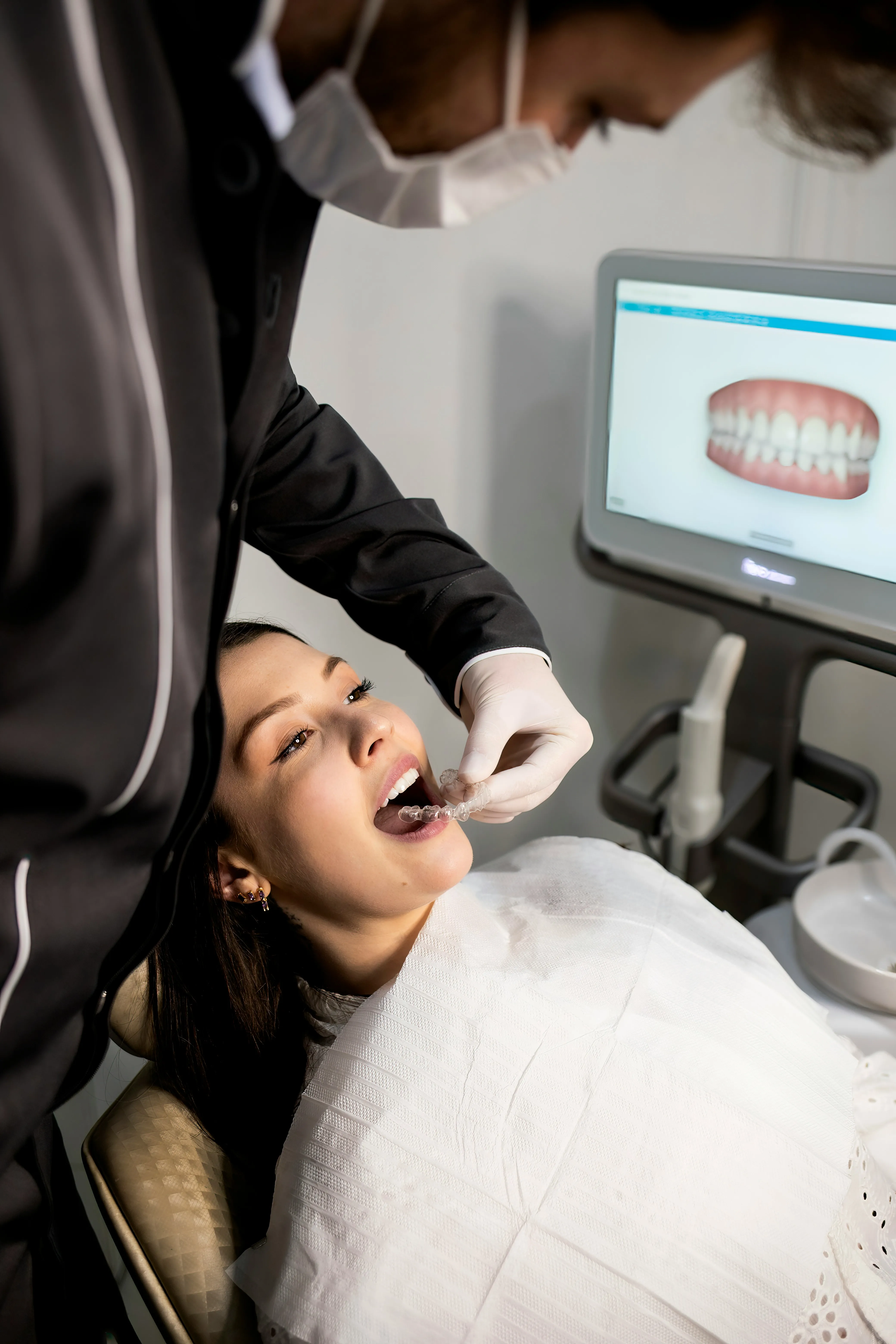
Illustrative image
Treatment
Smile Designing
A planned approach to the appearance of your front teeth, combining the relevant treatments into one considered sequence.
Treatment Overview
What smile designing involves
Smile designing is a planning process rather than a single procedure. It looks at the shape, size, colour, alignment and proportion of the front teeth, and at how they sit in relation to your lips, gums and face.
Depending on what you want to change, a plan might combine whitening, reshaping, alignment, veneers, crowns or replacement of old restorations. The point of planning is to sequence those treatments sensibly rather than tackling them piecemeal.
Healthy foundations come first. Decay and gum problems are treated before any cosmetic work begins, because appearance-focused treatment placed on an unhealthy foundation does not last.
Discussion matters here more than in most treatments, because the outcome is partly a matter of your own preference. What is realistic in your case is explained clearly before anything begins.
Who May Need It
Common reasons to consider this treatment
These are general indications, not a diagnosis. Only an examination can establish what is appropriate in your case.
- Dissatisfaction with the overall appearance of your front teeth.
- Chipped, worn or uneven front teeth.
- Gaps or spacing between the front teeth.
- Old fillings, crowns or veneers that no longer match in colour or shape.
- Teeth that appear disproportionate in size or length.
- A wish to plan several appearance-related treatments in a considered sequence.
Assessment
How Dr. Anshul evaluates your case
- A discussion of what specifically you would like to change, in your own words.
- Examination of the teeth, gums and bite, since appearance-focused treatment must work with a healthy, functional bite.
- Photographs, and impressions or scans, to record the starting position and plan the changes.
- Identification of anything that must be treated first, such as decay or gum inflammation.
- An explanation of the realistic options, what each involves, and any limitations in your particular case.
Treatment Process
Step by step
A general sequence. Your own plan is confirmed after assessment.
-
Discussion
Establishing what you would like to change and what matters most to you about the result.
-
Examination and records
A full check of teeth, gums and bite, with photographs and scans or impressions to plan from.
-
Preparatory treatment
Any decay, gum problems or failing restorations are addressed before cosmetic treatment begins.
-
Planning and preview
The proposed changes are planned and, where appropriate, previewed so you can see the intended direction before committing.
-
Treatment sequence
The agreed treatments are carried out in a logical order — for example alignment or whitening before restorative work.
-
Review and refinement
The result is reviewed, adjusted where needed, and long-term maintenance is discussed.
Benefits
What this treatment can achieve
- Treatments are planned together rather than approached one at a time.
- The plan is discussed and agreed before treatment begins.
- Underlying dental health is addressed first, not worked around.
- The sequence is arranged in a sensible order to avoid repeating work.
- Where appropriate, the intended direction can be previewed before committing.
Treatment Timeline
What to expect, generally
- Smile designing is a staged process, since it usually combines more than one treatment.
- Cases involving only whitening and minor reshaping may be completed in a small number of visits.
- Cases involving alignment, veneers or crowns extend over months, particularly where orthodontic movement is part of the plan.
- Any preparatory treatment is completed before the cosmetic sequence begins.
- An expected sequence and duration for your own plan is set out before treatment starts.
Aftercare
Looking after your teeth afterwards
General guidance. You will be given instructions specific to your treatment.
- Maintain thorough daily cleaning; restorations still need cleaning at the margins.
- Avoid biting hard objects — ice, pens, packaging — which can chip restorations and natural teeth alike.
- Wear a night guard if one has been recommended for grinding.
- Limit strongly staining food and drink where whitening formed part of the plan.
- Keep to your recommended check-up interval so restorations can be monitored.
- Report any chipping, roughness or change in your bite promptly.
Questions
Smile Designing — common questions
No. It is a planning process that may combine several treatments — whitening, reshaping, alignment, veneers or crowns — sequenced in a considered order. What your own plan involves depends on what you want to change.
Where appropriate, the intended direction can be previewed during planning so you can see it before committing. What is possible in your case is explained at the assessment.
If decay, gum inflammation or failing restorations are present, these are treated first. Appearance-focused treatment placed on an unhealthy foundation does not last.
Longevity depends on the treatments involved, your bite, your habits and your daily cleaning. Restorations do not last indefinitely and may need replacing in time. What to expect is explained for your specific plan.
The information on this page is general dental information, not individual advice or a diagnosis. What is appropriate in your case can only be established by an examination. See the Dental Information Disclaimer.

Illustrative image — a stand-in portrait, not a photograph of Dr. Anshul
Your Dentist
Dr. Anshul
BDS — University of Delhi
Dentora is a solo practice. Dr. Anshul is your primary dentist for the assessment, the treatment plan, the treatment itself and the follow-up, and remains your point of contact if specialist input is coordinated.
10 years of clinical experience · English & Hindi
Appointments
Considering smile designing?
Send an appointment request and Dr. Anshul will examine, explain the findings and set out the options before anything is planned.
Monday – Saturday, 10:00 AM – 7:00 PM · Sunday — Closed